資料來源#
- Full Walkthrough: Workflow for AI Coding — Matt Pocock
- Uncle Bob on Software Fundamentals in the Age of AI
摘要#
從獨立 TypeScript 教育者轉型為 AI 程式設計教育者。經營 AI Hero 網站。撰寫了一門 Claude Code 課程(錄製時的 context window 為 200K;課程推出當天 Anthropic 啟用了 1M context)。打造了 Sandcastle,一個用於平行代理程式迴圈、以 Docker 沙箱隔離 git worktree 的 TypeScript 函式庫。
值得注意的主張與立場#
- 軟體工程基本功依然適用。 這是他在 AI Engineer 2026 主題演講與工作坊中的核心論點:「我們忘了,軟體工程的基本功,也就是與人合作時真正重要的那些事,同樣非常適用於 AI。」他引用 Brooks 的《Design of Design》、Pragmatic Programmer 的 tracer bullets、Ousterhout 的《Philosophy of Software Design》,以及 Fowler 的重構規則。
- Smart zone 與 dumb zone。 借用 Dex Horthy(Human Layer)的框架:LLM 的表現會隨著 context 大小呈二次方下降。不論宣稱的視窗有多大,他都把 smart-zone 分界點定在約 100K tokens(參見 Context Window Smart Zone)。
- 《Memento》的隱喻。 每個工作階段都會重設為 system prompt。他偏好使用
clear而非compact;壓縮會產生「沉積物」,降低後續工作的品質。 - 從規格到程式碼的做法不對。 換個名字的 vibe coding。戰場在程式碼,不在規格。
- 先深度訪談再規劃,而非先規劃再閱讀。 他使用一項不斷追問的訪談技能(
grill-me),在撰寫 PRD 之前,先達到 Brooks 所說的「設計概念」——也就是與 LLM 建立共同理解。他不會審查產出的 PRD,因為雙方在訪談過程中已達成共識(參見 Design Concept Grilling)。 - Tracer bullets 勝過多階段計畫。 涵蓋每一層的垂直切片,勝過逐層橫向執行;代理程式自然會橫向編寫程式碼,因此需要推動它們改變做法(參見 Vertical Slice Tracer Bullets)。
- Kanban 勝過循序計畫。 帶有相依阻擋關係的 Kanban 可以平行處理;編號的階段清單則會讓工作依序進行。
- 深層模組更勝一籌。 Ousterhout 的深層模組模式能讓程式碼庫更適合代理程式:介面小、行為多、測試邊界大(參見 Deep Modules for Agents)。
- 審查者使用全新 context。 若實作時已處於 smart zone,而審查者與實作者共用 context,審查者就會落入 dumb zone。審查前一律先清除 context。
- 對審查者採推送式,對實作者採拉取式。 審查者的 coding standards 一律放在 context 中;實作者則透過技能按需取得。
- 文件腐化會造成致命影響。 實作完成後刪除(或關閉)PRD;舊 PRD 會誤導未來的代理程式。
- 掌握自己的技術堆疊。 他不信任 spec-kit / open-spec / Taskmaster 等預先建置的技術堆疊,因為一旦出問題,使用者就會失去可觀察性。
- 關鍵不只在 context 大小,也在 context trajectory。 他在 2026-08-19 與 Robert C. Martin (Uncle Bob) 的訪談中提出這個概念:工作階段會及早形成一種方向,之後的一切都會承襲這個方向——「如果你讓它說,好吧,也許我們應該在這裡測試 UI,那麼無論你讓它做多少次修改,它每次都會再測一次 UI。而清除這種軌跡的唯一方法,就是清除 context window。」他藉此說明,角色分工的代理程式不只因技能不同而有所區別:實作者的軌跡(「先讓它能運作」)與強化者的軌跡(「達到 100% 覆蓋率」)互不相容,不能共用同一個視窗。Martin 接受這個框架,並以一個例子說明:有人在一場談咖啡的對話旁提到肥皂劇,之後每個關於咖啡的回答都會扯到那部肥皂劇。
- 引導與機制。 他用自己的術語,描述這場訪談所圍繞的區分:把規則堆進 CLAUDE.md/AGENTS.md 是引導;要求代理程式通過檢查的 checker 則是確定性機制。他對審查者給予比實作者更多引導,因為審查者的任務限制較少,而且已經能看到 diff(參見 Latent vs. Deterministic Space)。
- 閱讀上的不對稱。「你傳給[代理程式]的東西,它們會讀。這和人類非常不同。」他估計人類讀完長規格的命中率只有 20%,「也許 5%」,而 Martin 則從相反方向補充:代理程式寫的東西,人類不會讀。兩人都沒有進一步下結論;但這是整份資料中最清楚的一句話,說明以文件為媒介的工作流程,為何在兩個方向上表現不同。
使用的工具、技能與基礎元件#
grill-meskill — 規劃前進行不斷追問的訪談write-a-PRDskill — 目的地文件,建立後絕不再讀prd-to-issuesskill — 將垂直切片拆成可獨立認領的 Kanban 工作項目improve-code-base-architectureskill — 找出淺層模組群集,並提出深層模組重構方案- Ralph Wiggum loop — bash
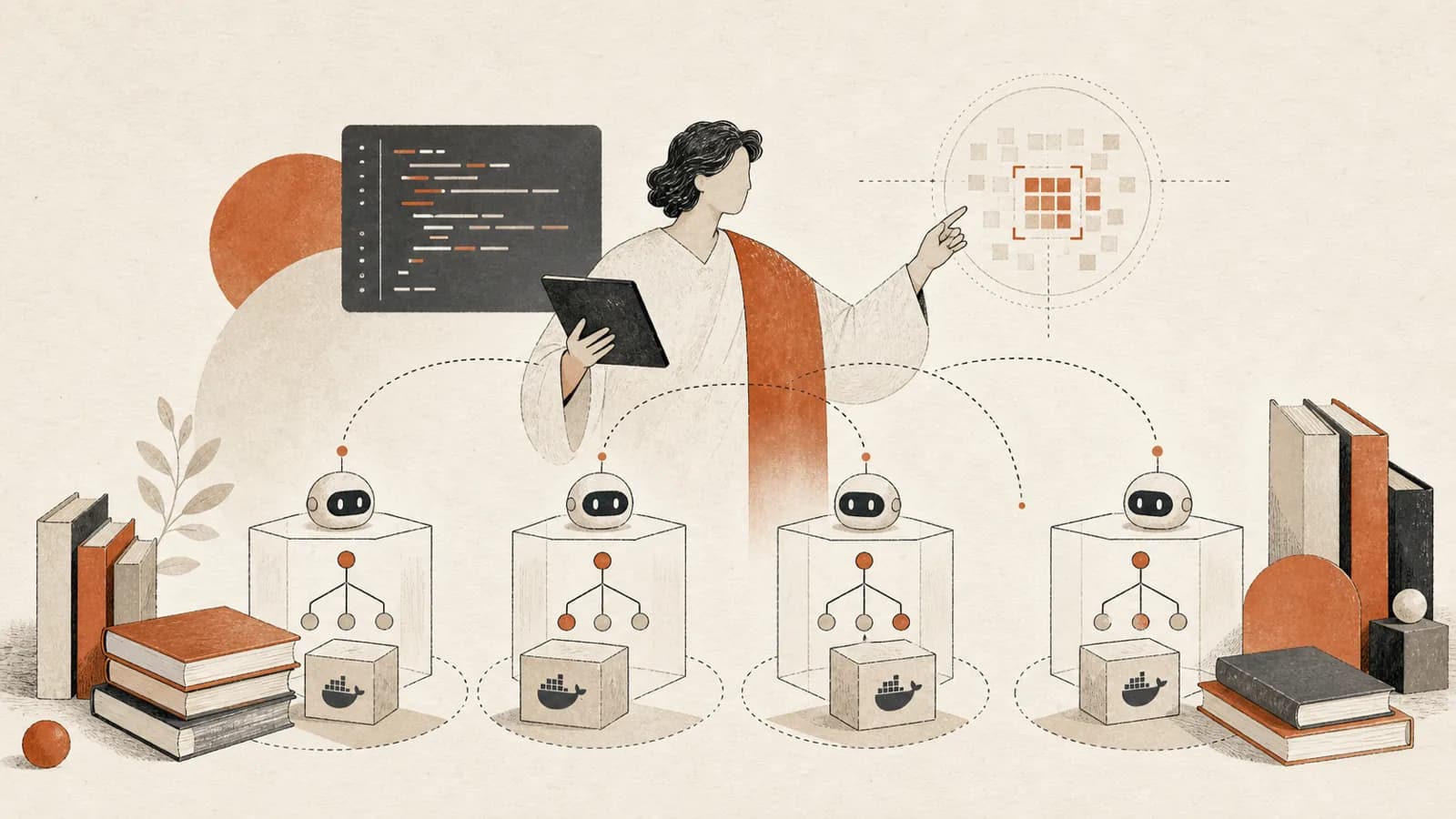
once.sh將完整待辦清單作為 context 執行 Claude,然後重複執行 - Sandcastle — TypeScript 編排器:每個 issue 使用獨立的 Docker work tree、平行實作者代理程式(Sonnet)、審查者代理程式(Opus)與合併者代理程式
- 狀態列 token 計數元件 —「每個 coding session 都不可或缺的資訊」(可知道何時接近 dumb zone)
工作流程架構(他的圖示)#
Idea → grill → research/prototype → PRD (destination) → Kanban (journey, vertical slices) → AFK loop (implement → review → merge → loop) → human QA → team review
前半段由人類參與;AFK loop 讓實作在沒有人類在場時進行;QA 則是人類品味重新進入系統的環節。
重要引言#
- 「如果你的程式碼庫沒有回饋迴圈,你永遠永遠永遠都無法從 AI 得到像樣的 AI 輸出。」
- 「我需要達成共同理解。我需要的是一項資產,不是計畫;我需要與 AI 同步。」
- 「糟糕的程式碼庫會造就糟糕的代理程式。」
- 「我們需要兩份重要文件:一份記錄目的地,另一份記錄旅程。」
關聯文章#
- Context Window Smart Zone — 他對這項限制最清楚的教學框架
- Design Concept Grilling — grill-me skill 出自他的設計
- Vertical Slice Tracer Bullets — 將 Pragmatic Programmer 的概念應用於代理程式任務拆解
- Deep Modules for Agents — 將 Ousterhout 的概念應用於適合代理程式的程式碼庫
- Agent Loop Pattern — Ralph loop 是他的經典案例
- Harness Shrinkage as Models Improve — 相反觀點:他認為即使模型很強,harness 仍然重要,但也同意實作可以完全 AFK
- Agentic Technical Debt — 他的 deep-modules + grill-me + Sandcastle 技術堆疊,是從實務工作者與務實主義者角度提出的同一種防禦方式;Anthropic 則透過 CLAUDE.md 向創辦人提出這種做法
- Robert C. Martin (Uncle Bob) — 2026-08-19 訪談的對象;他從另一側出發,歷經五十年後獨立得出「糟糕的程式碼庫會造就糟糕的代理程式」這個結論
- Spec-Driven Development as the New Waterfall — 他一貫主張「從規格到程式碼的做法不對」;Martin 為這個立場補上歷史脈絡與經濟論證,也提出以持續性作為定義標準
資料來源#
- Full Walkthrough: Workflow for AI Coding — Matt Pocock — AI Engineer World's Fair 工作坊,2026-04-24
- Uncle Bob on Software Fundamentals in the Age of AI — 以訪談者身分於 2026-08-19 直播訪問 Robert C. Martin (Uncle Bob)(
practitioner-opinion;自動字幕逐字稿):context trajectory、引導與確定性機制、閱讀上的不對稱,以及 150K smart-zone 數字
Cited by 32
- Learning to Co-Work with AI: A Software Engineer's Field Guide×8
Adopt a grill-me discipline. Matt Pocock's skill, verbatim: "Interview me relentlessly about every…
- Agent Loop Pattern×5
A loop is an agent process that repeatedly executes a prompt until a queue is empty or a stopping…
- Context Window Smart Zone×5
Marker drift worth noting. In this conversation the smart-zone boundary is given as "the first 150k…
- Spec-Driven Development as the New Waterfall×5
A beautiful plan is a stronger commitment device than a mediocre one, which makes the plan-maxing…
- Opinions on Using AI Tools & the Future of the Software Engineering Role×4
Code-review fluency — the new bottleneck once agents ship faster (Matt Pocock, Ai Native Product…
- Deep Modules for Agents×3
John Ousterhout's A Philosophy of Software Design distinguishes deep modules (small interface,…
- Design Concept Grilling×3
Matt Pocock's grill-me skill — a relentless interviewer prompt that walks down decision-tree…
- Harness Shrinkage as Models Improve×3
Not every voice agrees. Matt Pocock argues the harness — feedback loops, deep modules, mechanical…
- Agentic Technical Debt×2
Deep Modules For Agents — Ousterhout-style deep modules + persistent-context discipline are the…
- Impose Values, Not Disciplines×2
The diagnosis is working memory. Red-green-refactor's tight alternation exists because a human can…
- Parallel Agent Orchestration×2
His stated advantages are both about context rather than capability: "When you focus the agents…
- The PRD-Replacement Spectrum at AI-Native Speed×2
Alignment is relocated, not removed. It moves earlier (grill before any artifact — Design Concept…
- Returns to Expertise in Agentic Coding×2
uncle bob software fundamentals age of ai — Robert C. Martin with Matt Pocock, 2026-08-19…
- Robert C. Martin (Uncle Bob)×2
uncle bob software fundamentals age of ai — livestream interview with Matt Pocock, 2026-08-19, 57m,…
- Vertical Slice Tracer Bullets×2
Borrowed from The Pragmatic Programmer and applied to agent task decomposition by Matt Pocock: when…
- Agent-Generated Test Quality
uncle bob software fundamentals age of ai — Robert C. Martin with Matt Pocock, 2026-08-19…
- AI Native Product Cadence
Code review. When agents ship more code, humans review more. Matt Pocock's confession applies: "I…
- Building Is Cheap, Arguing Is Expensive
This norm is in productive tension with the wiki's planning-first concepts. Design Concept Grilling…
- Claude Code
Matt Pocock — workshop-grade workflow; adapts skills to grill-me + Ralph loop pattern
- The Code-Quality Payoff Is Token-Indexed
uncle bob software fundamentals age of ai — Robert C. Martin with Matt Pocock, 2026-08-19…
- Context Lifecycle Management
Summarization's cost is now quantified, not intuited. Context Window Smart Zone records Matt…
- Deterministic Engineering for Agent Code Review
uncle bob software fundamentals age of ai — Robert C. Martin with Matt Pocock, 2026-08-19…
- Evals as Product Spec
Matt Pocock doesn't use the word "evals" — his pedagogical framing is "verification" and "feedback…
- Latent vs. Deterministic Space
uncle bob software fundamentals age of ai — Robert C. Martin with Matt Pocock, 2026-08-19…
- Entities — People, Orgs, Tools & Projects
Matt Pocock — Independent AI-coding educator; built Sandcastle library;…
- Open Questions Backlog
Agent Loop Pattern: Loop output review is now Matt Pocock's confessed bottleneck — "we just need to…
- Is Persistence the Line Between Prompting and Spec-Driven Development?
From Spec Driven Development As Waterfall: is persistence the right definitional line between…
- Prototype Over PRD
PRD as destination doc · Design Concept Grilling (Matt Pocock) · Reach the design concept by…
- Review as the Control Point
uncle bob software fundamentals age of ai — Robert C. Martin with Matt Pocock, 2026-08-19…
- Reviving Impractical Quality Tools
uncle bob software fundamentals age of ai — Robert C. Martin with Matt Pocock, 2026-08-19,…
- Verification as the New Bottleneck
uncle bob software fundamentals age of ai — Robert C. Martin with Matt Pocock, 2026-08-19…
- Where Does the Why Live?
The grilling session. Matt Pocock's grill-me (Design Concept Grilling) drives toward Brooks's…
Related articles
- Context Window Smart Zone
Smart zone vs dumb zone (Dex Horthy / Matt Pocock): quadratic attention scaling, ~100K marker independent of advertised…
- Deep Modules for Agents
Ousterhout deep-vs-shallow modules applied to agent-friendly codebases; push-vs-pull instruction delivery; reviewer in…
- Design Concept Grilling
Matt Pocock's `grill-me` skill; reach Brooks "design concept" before any plan; counter to specs-to-code; PRD as destina…
- Reviving Impractical Quality Tools
Robert C. Martin's mechanism for why agents change code quality: CRAP score and mutation testing were sound ideas aroun…
- Robert C. Martin (Uncle Bob)
Author of Clean Code, 50-year programmer, and since December 2025 an agent operator whose stated goal is never to read…