資料來源#
- Beyond Benchmarks 2026: Five Data Sets Grounded in the Real World
- Do Context Files Help Coding Agents? A Two-Agent Ablation Study on Real Repositories
- Engines of Growth: Global Startup Trends Report
- State of AI 2026: The Builder's Economy
- The Founder's Playbook: Building an AI-Native Startup
摘要#
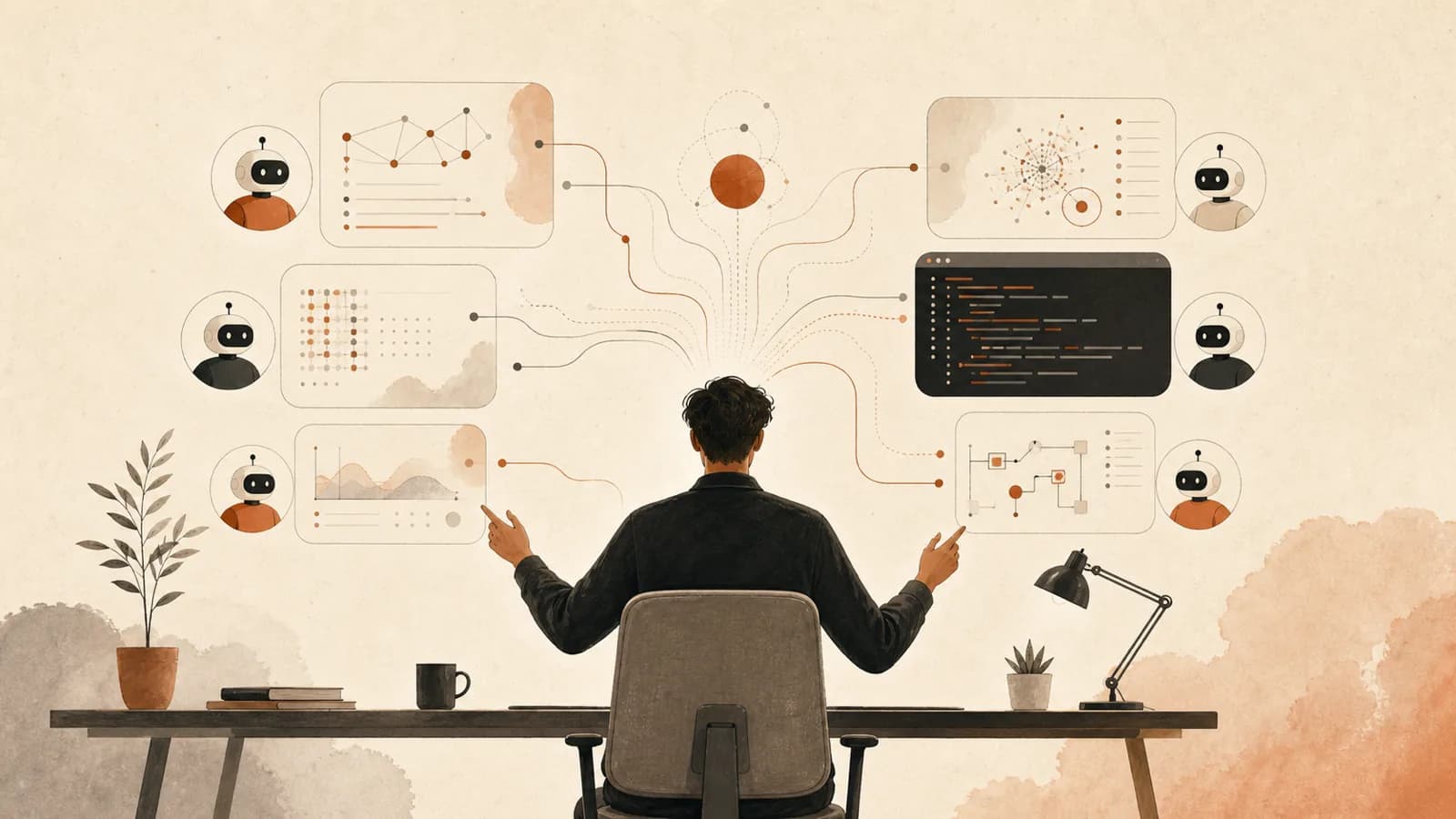
The Founder's Playbook: Building an AI-Native Startup 對 AI 原生新創公司中創辦人角色如何改變提出了主張:過去創辦人大多把時間花在執行工作上(寫程式、管理人員、處理日常營運)。2026 年的創辦人角色則是「大幅減少親自貢獻,更多協調代理程式」——這些專業 AI 助理能讀取檔案、執行命令、執行程式碼、瀏覽網路。創辦人的注意力往上移,從親自完成工作轉向提出想法,並指揮實現這些想法的系統。
影響最深遠的含意是:**「能打造產品的人」與「有值得打造之想法的人」之間的高牆已經消失。**具備領域專長的非技術背景創辦人如今也能打造正式上線的軟體;技術能力出色、但沒有商業背景的創辦人也能產出 GTM 策略、財務模型與募資簡報。創辦人候選人的範圍因此擴大,不再侷限於工程背景。
各階段的角色轉變#
這種協調模式會隨著AI-Native Startup Lifecycle演進:
| 階段 | 創辦人投入時間處理 | AI 負責處理 |
|---|---|---|
| 點子 | 假設設計、客戶訪談、驗證紀律 | 研究、競爭版圖分析、反方論證、訪談架構審查、外聯自動化 |
| MVP | 範疇與架構決策、使用者回饋判斷、轉向或堅持的決策 | 程式碼生成、安全審查、衡量架構、回饋流程後勤 |
| 上線 | 營運系統設計、決定要系統化的事項、找出只能由創辦人處理的工作 | 程式碼庫稽核、技術債排序、營運負載盤點、PM 作業系統 |
| 擴張 | 產品敘事、董事會關係、企業交易、創辦人對創辦人的對話 | 企業支援層、GTM 執行、領域知識編碼、護城河敘事 |
模式是:創辦人少做事,多指引方向。留下來的工作是真正需要創辦人判斷力的事——品味、敘事、人際關係,以及那些多年累積影響的決策。
「精實的 10 人獨角獸」主張#
該手冊將極致精實定位為刻意追求的目標,而非資源匱乏下的特例:
「2026 年的早期新創公司已截然不同。它們在設計上極度精實,往往只有創辦人一人,或是由創辦人加上少數幾名成員組成。只要以 AI 作為基礎設施,同時支撐技術與組織發展,它們就能在擴編團隊前達成產品驗證、早期營收,甚至獲利。」
這項結構性主張認為,過去三個職能各自需要聘人才能跨越的門檻(工程師打造產品、業務人員銷售、營運人員管理公司),如今可由三種 Claude 介面大幅取代:
- 對話式智慧與研究(「隨時待命的領域專家」)——取代顧問和部分研究團隊職能
- 代理式程式設計(「隨時待命、永遠不會受阻的工程師」)——取代外包開發公司和早期工程職缺
- 工作流程自動化(「隨需提供的自動化營運團隊」)——取代營運與行政人力
這並未消除工程或營運工作,而是消除了執行工程或營運工作時的人力門檻。創辦人仍得知道要打造什麼,仍得設計工作流程,也仍得指揮代理程式。
以數據衡量精實組織的主張(Emergence Capital,2026 年 6 月)#
Emergence Capital 的 Beyond Benchmarks 2026 為手冊僅止於主張的精實模式,以及剩餘人力集中在哪些職能,提供了數據:五個合作夥伴資料集(Carta、Pave、Ashby、Standard Metrics、Stackpack),涵蓋超過 5 萬家營運中的公司:
- 各輪募資時的團隊規模正在縮小,而且仍在下滑(Carta 中位數,2021 年高峰 → 2025 年):Seed 10.3 → 6.2、Series A 25.9 → 16.8、Series B 72.3 → 48.2;首次聘人的中位天數 214 → 284。相較以往任何一批新創,創辦人都以更精簡的團隊營運,也維持單人或極小團隊的時間更久。這正是協調者角色所仰賴的結構性前提,如今有 2020–2025 年的數列支持。
- AI 公司在人力配置上的結構與眾不同。若有招聘,AI 公司會把更多人力配置在工程職能(相較整體科技市場的占比高 11 個百分點;員工達 1,000 人以上的公司中,工程人員占 53% 對 42%),代價是面對客戶與營運職能的人力減少——銷售團隊較精簡(17% 對 19%)、客戶支援(低 5 個百分點)、財務(低 3 個百分點)。彙總資料呈現出協調者論點的具體樣貌:手冊所說可由代理程式負責的支援與營運職能維持精簡,而資金主要投入打造產品的人力。
此處的但書與來源一致:資料由創投發布、由資料合作夥伴提供;Carta 的員工人數樣本涵蓋整體市場,因此中位數描述的是整個母體,並非刻意精簡的協調者型創辦人群體的純粹測量。還要留意反向訊號——平均 AI 公司正積極擴編(見 AI Investment Story, Not Efficiency Story),因此目前每位員工的營收低於非 AI 同業;超精實、由協調者引領的組織位於分布尾端,而非平均值。
自我回報的精實團隊主張(AWS,2026 年 6 月)。AWS 的 Engines of Growth 創辦人調查以受訪者自己的說法重申協調者前提:AI 原生公司「以大約一半的人力擴大產出」,而「過去需要數十名工程師、多年資金,以及遍布全球的基礎設施才能完成的工作,如今小型團隊幾週內就能組建完成。」報告中的案例是Mindflow(法國):一支 40 人團隊打造 AI 驅動的 IT/安全/雲端自動化服務,客戶包括約 100 家大型企業(LVMH、Hermès、Thales、Bouygues、Uniqlo),並為客戶節省超過 316,000 小時——這支小團隊以代理程式驅動的槓桿服務大量企業客戶,展現公司規模下的協調者模式。這是廠商自我回報的行銷內容(應視為案例說明,而非測量結果),也有相同的分布尾端與平均值但書:調查中的 AI 原生群體是精選的前沿子集,而非 AI Investment Story, Not Efficiency Story 所衡量、積極擴編的平均值。
經調查呈現的扁平精實組織(ICONIQ,2026 年第二季)。ICONIQ 的 State of AI 2026(約 305 家打造 AI 軟體的公司,empirical)衡量了精簡組織的意願:33% 計畫採用比原本預期更小的團隊,以反映 AI 帶來的效率提升(另有 45% 計畫調整職務組成,但不淨減人數;N=302)。協調式組織的扁平化也呈現在結構上——營收達 1 億美元以上的公司中,AI 營收占比 50% 以上的公司有 72% 僅設 1–4 層管理階級,同業則為 56%;高成長公司也在擴大第一線主管的管理幅度(研發主管至少管理 7 人的比例從 21% 升至 30%)。最鮮明的協調者案例是一則業界人脈分享:一家早期公司提供不限量 token,但要求主管以交付責任證明生產力提升 3–5 倍(頂尖工程師每天的推論成本最高達 8,000 美元),並且「把 PM 和設計師合併成由一人負責產品」——公司只由少數人組成,透過協調代理程式發揮槓桿,而非增加人手。這是意願調查加上軼聞,並非人力普查;完整的重組分析見 AI-Native Organization。
協調者與工具的定位張力#
這與 AI Employee Framing 存在顯著張力(Kropp 等人,HBR,2026 年 5 月,n=1,261):該手冊大量採用擬人化描述——「隨時待命的專家」、「永遠有空的工程師」、「自動化營運團隊」、「施工團隊」。Kropp 等人的實驗研究顯示,將 AI 代理程式描述為員工(相較於工具)會明顯:
- 降低使用者對 AI 產出內容的個人責任感(少 9 個百分點)
- 增加不必要的升級求助(多 44%)
- 降低錯誤發現率(少 18%)
- 不會提升採用率
該手冊沒有討論這項證據。協調者的定位被描述成一種助力(讓創辦人不再受人力不足所阻),但在結構上與 HBR 實驗所檢驗、並發現負面影響的描述方式十分接近。
**謹慎綜合:**把協調視為一種工作流程設計(多個專業代理程式、明確交接、創辦人指揮),在結構上有別於把協調視為一種心智模型,將代理程式視作共同工作的同事。前者保留責任歸屬;後者可能做不到。關於如何在協調負載下維持責任歸屬的建議,請參見 Human-AI Accountability Redesign。
哪些人如今也能成為創辦人#
該手冊指出一項不容易看出的影響:
「當創辦人的範圍擴大到工程背景以外的人,你就會看到由生活經驗截然不同的人打造新創公司,解決傳統科技創辦人管道從未優先處理(甚至可能從未注意到)的真實問題。」
這項預測隱含著:2026–2030 年的 AI 原生新創浪潮,將會解決與 2010–2020 年 SaaS 浪潮不同的問題,因為創辦人來自不同專業背景。手冊資源章節中的具體案例:
- Anything — 非技術背景創辦人經營完整的招募平台
- Kindora — 非營利組織主管打造慈善捐助者配對平台
- Wordsmith — 從律師轉任 CTO,打造法律科技產品
- GC AI — 具備領域專長的創辦人,打造符合企業內部法務團隊實際工作方式的產品
這些案例的共同模式是:創辦人在某個垂直領域有深厚的專業背景,於是親手打造自己一直希望存在的工具。這與 Printing Press Software Democratization 直接呼應——當寫程式的能力普及後,領域知識就成為差異化優勢。
哪些事情仍由人來做#
該手冊明確指出有一類工作只能由創辦人處理:
- 產品敘事決策
- 董事會關係
- 企業交易
- 創辦人對創辦人的對話
- 「那些會成為你護城河的判斷」
上線與擴張章節將營運系統的目的描述為「把你的注意力解放出來,讓你處理只有創辦人能做的決策」——而不是「讓創辦人退出公司」。協調者角色存在的目的是放大創辦人的判斷力,而非取而代之。
關聯文章#
- The Solo-Founder Shift — 以數據限定這個角色的實際情況:它確實存在,但持續時間不長;單人創辦人在中位數 399 天後就會聘用第一位員工,比共同創辦的團隊還早。代理程式減輕的是實作工作,而非創辦人必須依序處理工作的注意力(「單人創辦人預設就是單線作業」)
- AI-Native Startup Lifecycle — 這個角色所經歷的新創生命週期
- Engineer PM Convergence — 公司內部的類比(Cat Wu 談 Anthropic 的職務合併);創辦人擔任協調者,是同一轉變在一人公司的規模版本
- Printing Press Software Democratization — 宏觀類比;當寫程式普及後,領域知識便成為差異化優勢
- AI Employee Framing — 關於協調者描述方式所帶來風險的反向證據
- Human-AI Accountability Redesign — 在協調負載下維持責任歸屬的建議
- Seven Powers Applied to AI — 這個角色仍能打造哪些護城河(網路效應、規模、稀有資源仍然有效;轉換成本與流程力量則逐漸侵蝕)
- Harness Shrinkage as Models Improve — 隨著 harness 縮小,協調所需的輔助功能本身也會改變
- Claude Code / Cowork / Anthropic — 協調工作所依賴的介面
- Problem-Solution Fit Discipline — 防止協調速度超越創辦人判斷力的紀律
- AI Brain Fry — 監督的認知成本會隨協調的代理程式數量增加;這對同時執行許多平行工作階段的單人創辦人構成風險
- Compounding Data Moat — 這個角色的長期防禦目標:將創辦人的領域知識編碼到協調工作所依賴的基礎之中
- Founder-Led Sales Discipline — 明確的反方觀點:John Glasgow 主張在達成 PMF 之前,創辦人不該把銷售工作交給別人(無論是 AE 或代理程式);以範疇來化解矛盾:協調機械化工作,而非創辦人與客戶互動、蒐集訊號的核心循環
- The AI-Native Safe-Choice Inversion — 讓精實 AI 原生新創更容易銷售的需求面助力:買方如今想要 AI 原生產品,為協調者型創辦人提供支持
- Parallel Agent Orchestration — 這個角色的實際衡量形式:OpenAI 的 Codex 資料顯示,28.6% 的 OpenAI 員工同時管理 5 個以上代理程式;這為協調者工作流程提供採用數據與前沿預覽的上限
- AI Investment Story, Not Efficiency Story — Emergence 資料提供的反向訊號:平均 AI 公司正積極擴編(以工程人力為主),每位員工營收也低於非 AI 同業,因此超精實、由協調者引領的組織位於分布尾端,而非平均值
- Firm AI-Spend Intensity and Headcount Growth — 第二項反向訊號,並明確提醒注意母體差異:密集採用 AI 的成熟美國企業會增加約 10% 人力(各職務大致都會增加),而非縮編。因此「AI 讓團隊更精簡」只適用於從創立第一天就以精實模式打造的 AI 原生新創,並非普遍規律;既有企業將 AI 加到業務擴張中,而非用來替代人力
- AI-Native Organization — Tan 將這個概念從創辦人延伸到整家公司:在 YC,「現在人人都是代理程式管理者」,包括媒體、活動與財務人員;協調者角色擴散到每個職位,並以 skill 檔案編碼,而不再只是創辦人具備的技能
衍生文章#
- Orchestration vs Employee Framing: Reconciling the Founder's Playbook with HBR's Accountability Evidence — 完整調和此角色的協調者描述方式與 HBR 責任歸屬證據,解決本文「Open Questions」段落提出的張力
- The Orchestrator's Real Workload: Decision Burden, Framing Discipline, and Whether Taste Scales — 將決策負擔問題與 2026 年 7 月的監督證據綜合分析:負擔更重、形貌也改變了,只有透過結構性重新設計才能限制負擔
開放問題#
- 該手冊主張非技術背景創辦人如今也能打造正式上線的軟體,但沒有討論架構判斷上的遞迴問題(Agentic Technical Debt):非技術背景創辦人可能沒有足夠詞彙來寫出有效的 CLAUDE.md。這要如何擴展?(部分獲得回答——但重要性被弱化——Khatri 2026,arXiv 2607.27250,
empirical:在 288 次執行的雙代理程式消融實驗中,有一份評為良好/優秀的AGENTS.md,相較於完全沒有檔案,正確率並無可測量的提升(上限 <10–15 個百分點);在 36 格探測中,實際檔案也從未讓接近成功的案例轉為通過。如果非技術背景創辦人無法撰寫的檔案,對正確率的提升約為零,那麼遞迴問題帶來的負擔就比手冊本身的說法小。這仍無法解決問題,原因有二:消融實驗衡量的是單次工作階段的任務正確率,而非這種遞迴真正攸關的跨工作階段架構一致性;而研究指出的瓶頸——實作能力:功能設計、模式選擇、精確接線——正是非技術背景創辦人同樣缺乏、也無法交由檔案代勞的判斷力。遞迴問題可能根本不是透過內容檔案發生,而是透過審查發生。) - 「精實的 10 人獨角獸」是手冊提出的主張;手冊沒有提供 AI 原生新創公司達成 PMF 或 Series A 時的實際人數中位數,也沒有與前一批新創比較的量化資料。(部分獲得回答:Emergence Capital,2026 年 6 月 提供 Carta 各輪募資的人數中位數,以及 2020–2025 年的數列——Series A 為 16.8 人(低於 2021 年高峰的 25.9 人)、Seed 為 6.2 人(低於 10.3 人)、Series B 為 48.2 人——補上手冊缺少的前一批新創比較,也提供 AI 與整體科技業的人力配置比較(工程職能比重高、支援團隊精簡)。仍待解答的是:這些是各輪募資時的人數中位數,並非達成PMF時的人數;而 Carta 的樣本涵蓋整體市場,並未在 Seed/A 階段區分 AI 與非 AI 公司。)
- 協調者角色如何改變創辦人的決策負擔?親自處理的任務變少,但需平行監督更多代理程式;整體認知負荷是否改變仍不清楚,也可能更高(見 AI Brain Fry)。部分獲得回答:The Orchestrator's Real Workload: Decision Burden, Framing Discipline, and Whether Taste Scales——負擔更重,形貌也改變了:執行負擔以不利的比率換成監督負擔,因為接手的工作更容易出錯(疲勞時重大錯誤增加 39%)、較難察覺(被照單全收的規劃決策,在逐字稿中與真正的判斷難以區分),且價值並非單調遞增(HAS-Bench 的效益曲線達到高峰後,過度介入反而會破壞任務)。只有刻意安排結構才能限制負擔:限制平行處理數量、抽樣審查、設置高風險關卡。仍未衡量的是創辦人本身的監督負擔——並行活動遙測加總的是代理程式時數,而非人類注意力。
- Anthropic 一邊發布採用擬人化描述的手冊,一邊發表關注 HBR 證據的責任歸屬相關研究(auto-mode、alignment),卻沒有直接探討描述方式的相關文獻。Orchestration vs Employee Framing: Reconciling the Founder's Playbook with HBR's Accountability Evidence 的綜合分析,從營運層面調和了這項張力——將協調視為工作流程設計可以維持責任歸屬;將協調視為代理程式同事的心智模型則無法維持——但另一個開放問題仍在:為什麼手冊的行銷語言沒有反映 Anthropic 自己對描述方式紀律的研究?
資料來源#
- The Founder's Playbook: Building an AI-Native Startup — 主要參考第二章(「身為創辦人的意義正在改變」),以及全書關於角色轉變的描述
- Research: Why You Shouldn’t Treat AI Agents Like Employees — 描述方式影響的反向證據
- Anthropic's Boris Cherny: Why Coding Is Solved, and What Comes Next — Boris 提出的「最適合撰寫會計軟體的人,是優秀的會計師」論點
- How Anthropic's product team moves faster than anyone else | Cat Wu (Head of Product, Claude Code) — Cat Wu 對 Anthropic 內部職務融合的觀察
- Beyond Benchmarks 2026: Five Data Sets Grounded in the Real World — Emergence Capital,《Beyond Benchmarks 2026》(2026 年 6 月):各輪募資人數中位數,以及 AI 與整體科技業的人力配置比較,為精實組織主張提供實證依據。注意:這份由 PDF 轉出的原始資料中,有幾個表格的多值儲存格已合併(Core Four 表將 Top Decile 與 Top Quartile 疊在同一格,顯示為
736% 184%);本文引用的數字來自報告中的文字重點,以及重新檢視原始 PDF 第 37 頁的人力配置圖表,並非解析後的表格 - Engines of Growth: Global Startup Trends Report — AWS Startups,《Engines of Growth》(2026 年 6 月,廠商自我回報的調查):「以一半人力」擴大產出的精實團隊描述,以及 Mindflow 40 人團隊案例
- State of AI 2026: The Builder's Economy — ICONIQ Growth,《State of AI 2026: The Builder's Economy》(2026-07-08,
empirical):〈Talent & Organization〉一節——33% 計畫縮小團隊(N=302)、管理階層更扁平(營收達 1 億美元以上的公司中,管理層級為 1–4 層者占 72% 對 56%)、管理幅度擴大,以及由一人負責產品的業界人脈軼聞 - Do Context Files Help Coding Agents? A Two-Agent Ablation Study on Real Repositories — Prakhar Khatri,arXiv 2607.27250,2026-07-28(
empirical):內容檔案消融實驗,削弱了 CLAUDE.md 遞迴問題對本文非技術背景創辦人主張的反駁;有無檔案的通過率持平,失敗案例分類也指出,真正的瓶頸在實作能力,而非書面架構意圖
Cited by 30
- AI-Native Startup Lifecycle×6
The framework carries a second AI-era amendment from the same document, and it is stated by Thawar…
- AI-Native Organization×5
The org precedes the company. The AI-native shape is no longer something a startup is founded into;…
- Open Questions Backlog×4
Founder As Agent Orchestrator: The playbook claims non-technical founders can now build production…
- Agentic Technical Debt×3
Founder As Agent Orchestrator — non-technical founder pipeline raises the stakes: the founders most…
- How AI-Native Startups Avoid Speed Becoming Strategic Debt×3
Founder As Agent Orchestrator is useful only if orchestration means workflow design under founder…
- AI Investment Story, Not Efficiency Story×2
Founder As Agent Orchestrator — the same tension at the role level: the orchestrator-founder builds…
- Anthropic×2
2026 May — "The Founder's Playbook" ebook published (Anthropic Startups Program); first…
- Founder-Led Sales Discipline×2
Founder As Agent Orchestrator — the explicit counterpoint; reconciled by scope (mechanical work)…
- John Glasgow×2
Founder-led sales, even in the AI era. He got Campfire to ~$1M ARR as the sole AE doing every demo…
- Startup & Founder×2
Founder As Agent Orchestrator — Founder role shift: less individual contributor, more orchestrator…
- The Orchestrator's Real Workload: Decision Burden, Framing Discipline, and Whether Taste Scales×2
Founder As Agent Orchestrator — how does the orchestration role change the founder's decision…
- Parallel Agent Orchestration×2
Two of the three "how" margins in OpenAI's Codex usage study — concurrency (running multiple agents…
- The Solo-Founder Shift×2
Founder As Agent Orchestrator — the qualification: the orchestrator-founder is real but short-lived…
- AI Brain Fry
Solo-founder amplifier: Founder As Agent Orchestrator — running many parallel agent sessions scales…
- AI Employee Framing
Tension surface: Founder As Agent Orchestrator — the Founder's Playbook (Anthropic, May 2026) leans…
- The AI-Native Safe-Choice Inversion
Founder As Agent Orchestrator — the orchestrator-founder thesis assumes this AI-native-is-safe…
- Campfire
Founder As Agent Orchestrator — Glasgow's "don't offload sales to an AE or an agent" is an explicit…
- Claude Code
Founder As Agent Orchestrator — the founder-role shift Claude Code enables for non-engineering…
- Compounding Data Moat
Founder As Agent Orchestrator — the domain-expert founder pipeline that makes deep vertical…
- Cowork
Founder As Agent Orchestrator — Cowork plus MCP integrations is what makes the orchestrator role…
- Engineer PM Convergence
Founder As Agent Orchestrator — within-company role merging extrapolated to the…
- Firm AI-Spend Intensity and Headcount Growth
Founder As Agent Orchestrator — a counter-signal to the lean-team reading, with a population…
- Garry Tan
Founder As Agent Orchestrator — the role he prescribes to every YC founder and generalizes to…
- Harness Patterns Under Scale and Domain Shift: Context Routing, Other Domains, Large Action Spaces, and the Overseer
Founder As Agent Orchestrator: how does the orchestration role change the founder's decision burden…
- Harness Shrinkage as Models Improve
Founder As Agent Orchestrator — orchestration affordances themselves will shift as harness shrinks;…
- Human-AI Accountability Redesign
Solo-founder application: Founder As Agent Orchestrator — the five-pillar redesign framework…
- Orchestration vs Employee Framing: Reconciling the Founder's Playbook with HBR's Accountability Evidence
Founder As Agent Orchestrator — the role-shift this synthesis governs
- Printing Press Software Democratization
Founder As Agent Orchestrator — the role-shift the democratization produces; founders newly come…
- Problem-Solution Fit Discipline
Founder As Agent Orchestrator — orchestration role amplifies confirmation bias risk; without…
- Seven Powers Applied to AI
Founder As Agent Orchestrator — the role this analysis governs: which moats a lean-unicorn founder…
Related articles
- AI-Native Startup Lifecycle
Anthropic's May 2026 reframing of Idea/MVP/Launch/Scale assuming AI infrastructure: each stage's headcount/capital/skil…
- Compounding Data Moat
Anthropic's prescription for Scale-stage defensibility: time-locked behavioral fingerprint + domain-encoded edge cases…
- Claude Code
Anthropic's agentic coding product; created by Boris Cherny late 2024; TypeScript/React on Bun (itself Claude-rewritten…
- Engineer PM Convergence
Generalists across disciplines; product taste as bottleneck skill; Anthropic Claude Code team as case study; "just do t…
- AI Employee Framing
Kropp et al. (HBR May 2026, n=1,261): framing AI agents as "employees" vs "tools" cuts personal accountability −9pp, in…