資料來源#
- Andrew Ng: The Biggest Opportunities in AI Aren't Where You Think
- Anthropic's Boris Cherny: Why Coding Is Solved, and What Comes Next
- Beyond Benchmarks 2026: Five Data Sets Grounded in the Real World
- Indian AI Coding Startup Emergent Becomes a Unicorn with $130M Series C
摘要#
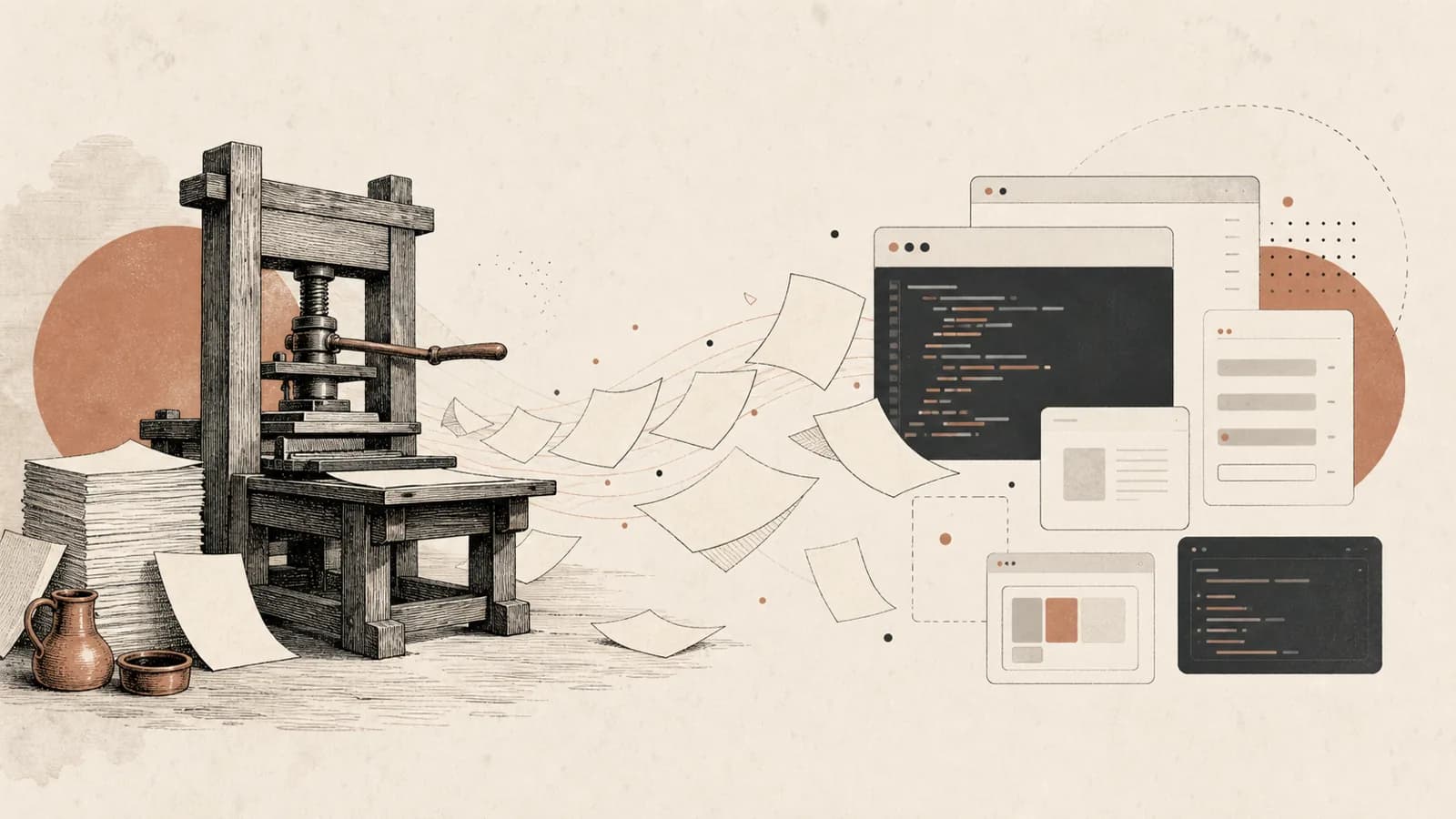
Boris Cherny 提出的類比,說明 AI 正如何改變軟體:1400 年代歐洲活字印刷術的發明。印刷術出現前,識字人口約占 10%;識字者受僱於大多不識字的國王與領主。Gutenberg 發明活字印刷術後的 50 年內,印出的書籍比之前一千年加起來還多;書籍成本下降約 100 倍。接下來幾個世紀,全球識字率達到約 70%。Boris 認為,軟體撰寫正處於同樣的轉捩點——製作軟體的成本大幅下降,這項技能變得普遍,而瓶頸也從程式設計轉向領域知識。
Boris 的類比原話#
「在印刷術出現之前,歐洲人口中基本上只有 10%識字。他們懂得讀寫。他們通常受僱於國王和領主,而那些人並不識字。」
「活字印刷術發明了,接著又有兩台印刷機;第一台印刷機出現後的 50 年裡,歐洲出版的文學作品比之前一千年還多。」
「軟體將成為一種徹底普及、人人都能做的事。」
「我認為,即使是現在,最適合寫會計軟體的人也不是工程師,而是很優秀的會計師,因為他們非常了解這個領域,而寫程式才是容易的部分。」
這個類比的主張#
- 生產成本大幅下降。 軟體就像印刷術出現後的書籍,製作成本會變得低廉。
- 技能普及。 軟體撰寫曾是專業技能,就像 1400 年的識字能力;如今會變成普遍技能。
- 領域知識成為差異化關鍵。 識字普及後,寫什麼比寫作這件事本身更重要。程式設計普及後,為誰打造什麼,會比程式設計技能更重要。
- 速度會快過 50 年。 Boris 的補充是:「快得多,不會是 50 年。」2026 年科技普及的時間尺度以月計,而非以世紀計。
這個類比切中之處#
- 教育制度花了幾個世紀才跟上大眾識字。 以「大多數學生在家無法閱讀」為前提建立的學校,必須重新打造。面對「大多數人都能打造軟體」這件事,目前還看不出有什麼現成的對應方案。訓練營、電腦科學課程與工程職涯階梯,都假設程式設計技能稀缺,但這個假設可能不再成立。
- 識字普及後,專業作家仍然存在。 Boris 說:「現在大家都能讀寫了……[但]仍然有專業作家,這仍是一種可以從事的工作。」他暗示,專業工程師在普及化後仍會存在,就像專業作家一樣——只是基準改變了。
- 識字普及並未取代領主。 大眾識字沒有削弱識字菁英的權力,而是改變了哪些技能更有價值,並將它們往上推移。Boris 隱含的押注是:價值會從「會寫程式」轉移到「能決定要打造什麼」——參見 Engineer PM Convergence。
這個類比不適用之處#
- 書籍是靜態的;軟體會變動。 書印出來後就放在那裡。軟體則需要維護、保護安全並擴展規模。「人人都能寫軟體」並未表示人人都能可靠地在正式環境中運行軟體。
- 軟體具有書籍沒有的複合網路效應。 單一本書不會像大多數軟體依賴其他軟體那樣仰賴其他書籍。這個類比低估了基礎設施、相依性與互通性。
- 閱讀是單向的;軟體則有利害關係人、使用者與攻擊者。 大規模普及軟體創作會帶來識字普及沒有引發的問題(安全、問責、法規)。
- 「會計師寫會計軟體」這項主張現在就能檢驗。 Boris 暗示我們已經看得到這種情況。來源中沒有 2026 年此類做法的頻率硬資料——但 Cat Wu 提出工程師若具備產品品味會更有優勢,與此相呼應:真正的槓桿是領域知識與程式設計的結合,而非純粹由非工程師創作。
Boris 提出的含意#
- 現在是創辦新創的最佳時機。 小型團隊能與既有企業正面競爭,因為既有企業必須重新訓練員工、改變流程並克服內部阻力;新創則能從第一天起就以 AI 原生方式建立(參見 Seven Powers Applied to AI)。
- 未來 10 年,足以顛覆產業的新創將增加 10 倍。 這是 Boris 的預測。
- Boris 預測的下一種價值來源:具備深厚領域知識、如今也能打造軟體的人。 會計師、醫師、律師、教師等領域專家,能為自己的領域撰寫工具,不必再等待 SaaS。
擴散的實證:AI 素養成為跨職能基準(Emergence Capital,2026 年 6 月)#
這個類比的核心主張是,專業技能會逐漸普及,直到成為一般基準。Emergence Capital 的 Beyond Benchmarks 2026 顯示,AI 素養正是在招聘資料中如此擴散:39–48% 的科技職缺描述,以及 28–40% 的商業職缺描述(人資、財務、營運、法務、客戶成功)如今都提到 AI 相關職責——「不再只有工程領域」。過渡期的溢價也看得見:即使是非 AI/ML 職稱,職務名稱中帶有「AI」也能帶來 13–26% 的基本薪資溢價(產品管理 +26%、技術顧問 +21%、軟體工程師 +20%、銷售賦能 +18%、資料科學 +13%);AI 原生公司支付的基本薪資高出 7%,新進員工獲得的股權則是非 AI 同業的 1.63 倍。這就是普及前的溢價——技能仍然稀缺到足以形成定價,但正朝著類比所預測的基準水準擴散。這也呼應了專業知識報酬的研究發現:市場如今願意為跨職能的 AI 素養加領域知識付費,這是「程式設計才是容易的部分,領域知識才是差異所在」在薪資上的映照。(資料由創投發表,但資料合作夥伴 Ashby/Pave 提供來源——資料是實際職缺描述與薪酬,而非問卷調查。)
相關文章#
-
Task Crossover — 用數字呈現普及化:工程任務占其他職業 AI 訊息的 7.4%,而技術疑難排解是另外七個職業群體中每一群的前三大外部任務之一
-
Task Saturation: Broad but Shallow AI Diffusion — 顯示目前普及化的上限:AI 使用最飽和的職業(軟體 QA 分析師、人資專員、文件管理專員),正是工作內容已經以文字為主的職業
-
Boris Cherny — 此論述框架的提出者
-
Seven Powers Applied to AI — 探討哪些護城河仍能維持的補充分析
-
Engineer PM Convergence — 同一方向在更短時間尺度上的呈現(公司內部職務合併)
-
Claude Character as Product — 人人都能打造產品後,品味、個性等柔性特質便成為差異所在
-
Harness Shrinkage as Models Improve — harness 的縮減是同一波普及化的一環:軟體的軟體也變得更簡單
-
Compute Allocator — 普及化的建造者所扮演的角色:既然生產成本低廉,就要決定什麼值得生產
-
Disposable Micro-Apps — 單一任務規模下的豐裕經濟:軟體便宜到可以打造、用一次再丟棄
-
AI-Native Startup Lifecycle — Anthropic 將此論點落實為分階段的創辦人實戰指南(2026 年 5 月)
-
Founder as Agent Orchestrator — 普及化帶來的角色轉變;創辦人開始來自非工程領域
-
Compounding Data Moat — 「撰寫軟體的能力」普及後取而代之的護城河:隨時間累積的行為資料,加上內含的領域邊界案例
-
Vibe Coding vs. Agentic Engineering — Karpathy 所說的「vibe coding 拉高了底線」,是從實務工作者的語彙描述同一種普及化
-
The AI-Native Safe-Choice Inversion — 需求面的映照:人人都能打造 AI 原生軟體後,買方開始期待有這類產品,進而翻轉哪家供應商才是「安全的選擇」
-
AI as Primary Author — 供給面的終點:創作主導權轉到機器手上時,Faros AI 量得 AI 撰寫內容有 60% 被採納;「人人都能打造」的普及化,變成「大部分內容由機器打造」
-
Returns to Expertise in Agentic Coding — 這個類比的實證。 Boris 說「寫會計軟體最好的人是優秀的會計師,因為程式設計才是容易的部分」,這正好對應 Anthropic 的研究發現:每種職業在已驗證成功率上,都與軟體工程師相差不超過 7 個百分點;真正能增強工具效用的是領域專業知識,而非程式設計技能——這就是「會計師寫會計軟體」主張一直等待的硬資料
-
Organizational Complements to AI — 能力普及是供給面;實際實現的價值仍集中在具備配套條件(存取權、技能、審查流程)的地方;兩者合起來解釋了為何同一模型下,OpenAI 的 Codex 使用情況在不同群體間如此不均
-
Experimental Learning Impact of Generative AI — 對能力底線提升說法的反向訊號:隨機學習實驗中,AI 帶來的進步偏向能力較高的四分位群體,暗示 AI 可能擴大而非縮小技能差距——在學習層面上與普及化論述相反
-
AI-Native Organization — 在單一機構內觀察這項論述:Tan 的 YC 財務人員將約 100 份 Excel 活頁簿整合成自己打造的應用程式(「她不是程式設計師,她現在是代理程式管理者」);Tan 最後舉例,一位沒有實驗室也沒有補助的父親,為兒子罕見的癲癇病打造了包含 80,000 個檔案的醫療知識庫(「豐裕不是一份政策白皮書,而是已交付的軟體」)
-
Emergent — 在市場上觀察到的普及化:超過 20 萬名非技術客戶,透過其「盒裝工程團隊」平台打造自己的 ERP/CRM 軟體;領域專家得以大規模為自己的領域撰寫正式工具
-
Balance-of-Power Superintelligence — 把同一普及化論點改寫至超級智慧的時間尺度:Zuckerberg 分發的是工具本身(「個人超級智慧」),Cherny 描述的是一項正在擴散的技能——公司理念在此頁面有實證可循
-
Standardize the Infrastructure, Not the Tools — 從平台決策的副作用觀察普及化:Shopify 將模型存取權設為共用基礎層後,銷售、財務與人資人員開始打造自己的「n-of-1」軟體,不必提出工程需求單
-
Open Source Under Agent Contributions — 從貢獻層面觀察同一種能力底線提升:DHH 表示,非程式設計師與跨領域程式設計師都能向 Linux 發行版提交 PR,再由維護者挑選合併
-
Role Averaging, Not Role Elimination — 普及化落到既有職務後的影響:開始打造工具的行銷人員與招募人員,會成為涵蓋更廣職責的平均型角色(Ng 說「你可以承擔更廣的工作範圍」);Ambrosino 的提醒是,取消專業訓練就會失去可知的最佳實務,這正是普及識字的代價面
-
Implementation Abundance Inverts Product Work — 對「人人都能打造後,什麼才稀缺」的兩種回答:Cherny 說領域知識,Ambrosino 說品味與策展。Returns to Expertise in Agentic Coding 衡量前者;Context Advantage, Not Taste 則主張後者最終會歸結為前者
尚待解答的問題#
- 2026 年,領域專家化身建造者是否真的已大規模發生?軼事案例(店家老闆、微控制器愛好者)有;非工程師把軟體建置作為主要工作,則較不明確。(部分解答:Anthropic 對 40 萬次工作階段的研究發現,非軟體職業在產生程式碼的工作階段中,達到已驗證成功的比例與軟體工程師相差約 7 個百分點以內——這是目前最有力的證據,顯示此主張至少對 Claude Code 使用者成立。市場規模的佐證:Emergent 表示有超過 20 萬名付費非技術客戶——貨運公司、工廠、營造業者打造自己的 ERP,物業管理人員打造 CRM 工具(TechCrunch,2026 年 7 月,
vendor-claim)——Boris 所說的「會計師寫會計軟體」,如今成為一個付費市場的現象,而不只是單一供應商的遙測資料。) 有進一步進展:Is Breadth Cheap Now? Specialist Ramp Speed and Domain-Expert-as-Builder at Scale 把所有證據分成三個層級——能力相當(已測得:差距在 7 個百分點以內)、市場存在(已證實但由供應商提出:Emergent 有超過 20 萬名非技術建造者;28–40% 商業職缺描述提及 AI 職責),以及以建造者為主要工作的人已成為人口層級的常態(仍未證實:所有受測群體都偏向已採用者,配套條件左右價值能否實現,而 ATLAS 的組成顯示專家把 AI 用在自己不擅長的任務上,並非非專家轉型成建造者)。如今的關鍵變數是配套條件與理解能力的保留,而非能力本身。實務工作者案例(2026-08-28):Andrew Ng 描述了一個已把這種做法視為常態的組織——「我的行銷人員都會寫程式」,有行銷人員自行打造的桌面應用程式、財務長撰寫的文件檢查指令碼,面試行銷人員時也會問「你打造過什麼」(Andrew Ng: The Biggest Opportunities in AI Aren't Where You Think,practitioner-opinion)。這最多是第二層級的證據——只有一家公司,而且是創辦人特別挑選採用此作法的公司(「我的團隊大概……走在趨勢前面一些」),也沒有成果衡量——但這是知識庫中第一個來自公司內部、而非供應商客戶數量,能證明非工程師以此作為主要工作的案例。 - 普及程式設計素養相當於什麼樣的義務教育?還是根本不會出現,而是形成一群自學建造者的長尾?
- Boris 所說的「會計師寫會計軟體」,會不會造成一萬種彼此不互通的利基工具?整合問題該如何解決?
衍生文章#
- Is Breadth Cheap Now? Specialist Ramp Speed and Domain-Expert-as-Builder at Scale — 以三個證據層級檢視領域專家化身建造者的問題:能力相當已測得、市場存在已證實、人口層級轉變尚未證實
- Learning to Co-Work with AI: A Software Engineer's Field Guide — 將普及化論點應用於個別工程師的技能發展(深耕領域知識,加上跨領域能力,成為新的差異化關鍵)
- Opinions on Using AI Tools & the Future of the Software Engineering Role — 以此類比代表「看好 AI 的業內人士」立場,也將其作為未來職務章節背後的大趨勢推力
資料來源#
- Anthropic's Boris Cherny: Why Coding Is Solved, and What Comes Next
- Beyond Benchmarks 2026: Five Data Sets Grounded in the Real World — Emergence Capital,Beyond Benchmarks 2026(2026 年 6 月):AI 素養在科技與商業職缺描述中的擴散,以及職稱含「AI」帶來的 13–26% 薪資溢價——以招聘與薪酬資料衡量技能擴散。注意:這份由 PDF 轉出的原始資料,有幾個表格的多值儲存格遭到合併(Core Four 表格將第 90 百分位與第 75 百分位數值疊在同一格,顯示為
736% 184%)——本文引用的數字來自報告文字摘要與重新檢視來源 PDF 第 36 頁的薪酬表。原始資料中的46% vs.6%部門儲存格並非合併錯誤:第 35 頁圖表標題為「職務描述提及 AI 的比例,相較於職稱提及的比例」,因此每個儲存格都是有效的職務描述與職稱配對數值 - Andrew Ng: The Biggest Opportunities in AI Aren't Where You Think — Andrew Ng 受訪於 Marina Mogilko,《Silicon Valley Girl》(2026-08-28,
practitioner-opinion):行銷人員寫程式、財務長撰寫指令碼與工程師招募的案例;僅用於領域專家化身建造者的未解問題
Cited by 31
- Opinions on Using AI Tools & the Future of the Software Engineering Role×4
Software gets democratized. Printing Press Software Democratization: like literacy after Gutenberg,…
- Learning to Co-Work with AI: A Software Engineer's Field Guide×4
Domain depth — the accountant who can now write accounting software beats the engineer with no…
- Open Questions Backlog×3
Printing Press Software Democratization: Is domain-expert-as-builder actually happening at scale in…
- AI-Native Organization×2
Printing Press Software Democratization — non-engineers building skill files is the democratization…
- AI-Native Startup Lifecycle×2
The playbook reads as Anthropic's claim that the founder's job hasn't changed — find a real…
- Andrew Ng×2
Build with AI as the hiring bar. "All of my marketers know how to code. So, as part of how I…
- Balance-of-Power Superintelligence×2
This is the same territory as Printing Press Software Democratization — Cherny's diffusion analogy…
- Boris Cherny×2
Printing press analogy. Sees Printing Press Software Democratization as the right historical…
- Compute Allocator×2
Printing Press Software Democratization — the abundance economics that make 99%-disposable rational
- Disposable Micro-Apps×2
Spinning up a single-use application to make one editing decision would be absurd under scarcity…
- Emergent×2
Who the customers are — the democratization-of-building datapoint: trucking companies building…
- Engineer PM Convergence×2
August 2026: the convergence extended past product and engineering, and given a hiring test. In a…
- Experimental Learning Impact of Generative AI×2
Printing Press Software Democratization — the tension: democratization predicts AI raises the…
- Founder as Agent Orchestrator×2
Printing Press Software Democratization — macro analogy; coding becomes universal so domain…
- Is Breadth Cheap Now? Specialist Ramp Speed and Domain-Expert-as-Builder at Scale×2
Printing Press Software Democratization — is domain-expert-as-builder actually happening at scale…
- Open Source Under Agent Contributions×2
3. The contributor pool changes composition, not just size. "Quite a lot of those pull requests…
- Returns to Expertise in Agentic Coding×2
Printing Press Software Democratization — Cherny's "the best person to write accounting software is…
- Seven Powers Applied to AI×2
Counter-positioning — Boris doesn't address this, but the analogy in Printing Press Software…
- Task Crossover×2
Crossover is the population-scale, telemetry-side measurement of a shift the wiki has documented…
- Vibe Coding vs. Agentic Engineering×2
Printing Press Software Democratization — the floor-raising half is the same democratization Boris…
- AI as Primary Author
Printing Press Software Democratization — authorship moving to the machine is the supply-side of…
- The AI-Native Safe-Choice Inversion
Printing Press Software Democratization — same era-shift framing from the supply side (who can…
- Claude Character as Product
Printing Press Software Democratization — once anyone can build software, soft attributes like…
- Compounding Data Moat
Printing Press Software Democratization — the macro analogy that creates the need for this moat…
- Context Advantage, Not Taste
Printing Press Software Democratization — Cherny's "domain knowledge displaces coding skill" is…
- Implementation Abundance Inverts Product Work
Printing Press Software Democratization — the supply side of the same abundance: the 90…
- Startup & Founder
Printing Press Software Democratization — Boris Cherny's analogy: 1400s literacy expansion → AI…
- Organizational Complements to AI
Printing Press Software Democratization — capability democratizes broadly, but realized value still…
- Role Averaging, Not Role Elimination
Printing Press Software Democratization — the same Ng datum (marketers who code, the embedded…
- Standardize the Infrastructure, Not the Tools
The claimed effect is spread outside engineering: sales reps building dashboards, finance building…
- Task Saturation: Broad but Shallow AI Diffusion
Printing Press Software Democratization — the QA-analyst and document-specialist saturation ceiling…
Related articles
- Engineer PM Convergence
Generalists across disciplines; product taste as bottleneck skill; Anthropic Claude Code team as case study; "just do t…
- Claude Code
Anthropic's agentic coding product; created by Boris Cherny late 2024; TypeScript/React on Bun (itself Claude-rewritten…
- Harness Shrinkage as Models Improve
Prompt scaffolding shrinks each model release; Cat Wu's pruning discipline; Boris Cherny "100 lines of code a year from…
- Open Questions Backlog
Generated by `_system/lint.py --write-backlog`. Do not hand-edit. Domain and Watching sections carry one row per page —…
- Returns to Expertise in Agentic Coding
Anthropic's 400K-session study: domain expertise (not coding skill) is what amplifies an agent — experts get 2× the act…