資料來源#
- A New Look at AI's Impact on Jobs: Firm-Level AI Spending and Workforce Adjustment
- Beyond Benchmarks 2026: Five Data Sets Grounded in the Real World
- State of AI 2026: The Builder's Economy
- The Shift to Agentic AI: Evidence from Codex
摘要#
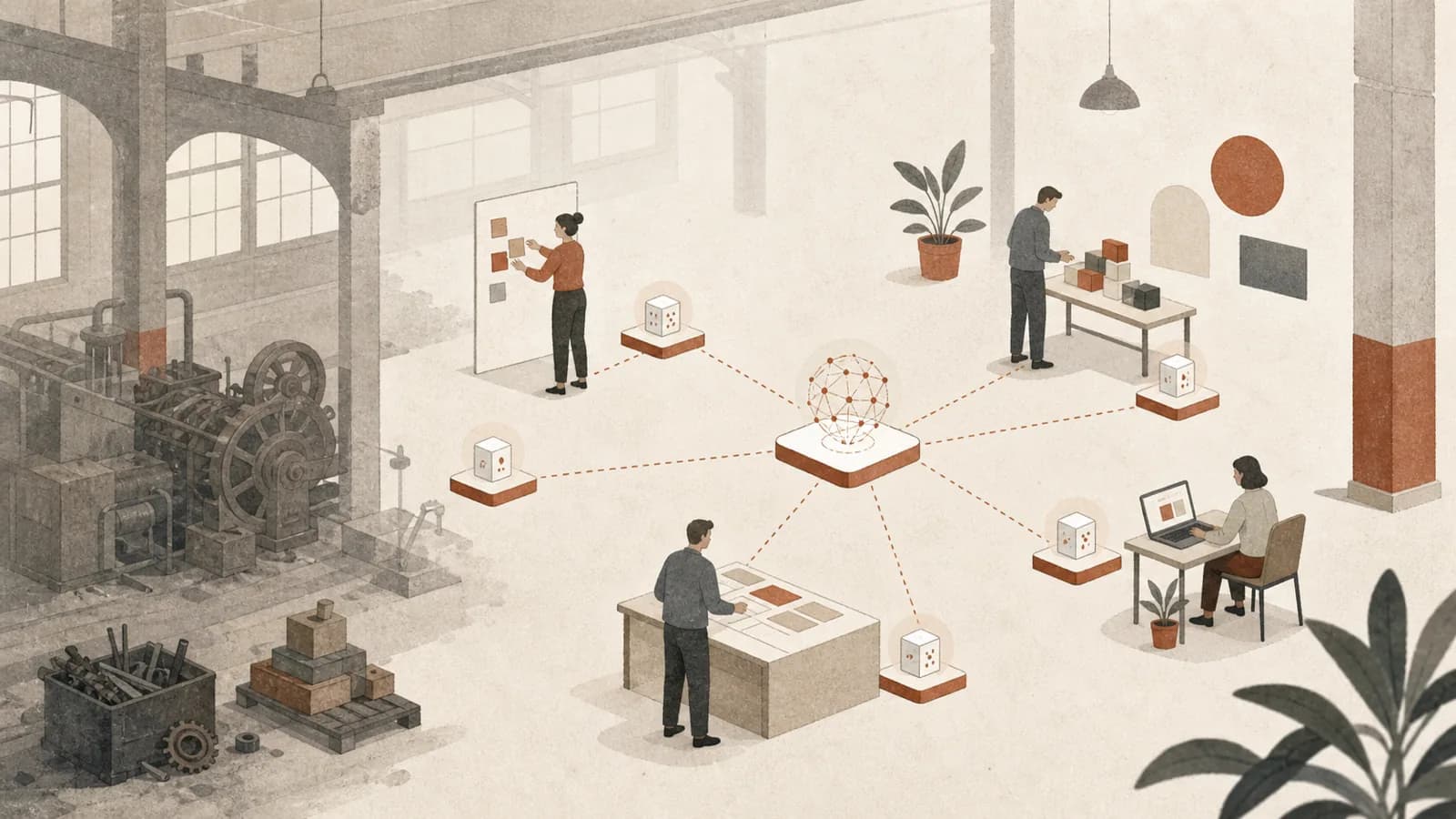
OpenAI 的 Codex 使用研究 用來解釋:為什麼在模型完全相同的情況下,代理式 AI 的採用率在不同族群間仍如此不均。通用技術研究有一項悠久傳統指出,新技術帶來的生產力增益,取決於對互補條件的投資——包括商業流程、工作者技能、組織設計與無形資本——而不只是技術本身的能力。 經典案例是 David (1990) 的發電機:早期工廠把集中式蒸汽引擎換成集中式電動馬達,卻保留舊有的廠房配置,因此收效甚微。真正的大幅增益直到數十年後才出現,當時企業才圍繞電力的獨特優勢重新設計生產(小型、分散式馬達 → 重新組織工廠樓面、調整任務順序、採用彈性配置)。這段歷史套用到代理式 AI 的啟示是:短期影響可能低估長期潛力,因為企業尚未發現或規模化部署這項技術所促成的新生產流程——這是重新表述給 AI 的 Brynjolfsson「現代生產力悖論」。
證據說明。 Codex 跨族群資料使用
empirical;GPT/互補條件的框架則是該論文對既有經濟學文獻(David 1990;Brynjolfsson、Rock & Syverson 2019;Demirer et al. 2026)的綜合。這是對採用差距的詮釋,不是對互補條件的測量性因果估計。
三族群差距作為自然實驗#
該論文最有力的實證操作是:如果採用只取決於模型能力,那麼只要能使用同一模型,各處的使用情況就應該相近。 但事實並非如此。Codex 的輸出 token 占比為 99.8%(OpenAI)/63.3%(組織)/16.5%(個人)——而且 OpenAI 工作人員在更多職能中使用它,並具有高得多的並行度。既然模型是固定的,差距必然來自互補條件:
- 存取權:能否使用相關檔案、儲存庫與系統
- 權限與安全要求
- 工作者技能以及對前沿模型的熟悉度
- 管理期待與組織支持
- 用來驗證委派工作成果的互補性審查流程
OpenAI 是高互補條件的極端案例(低廉的邊際使用成本、培訓活動、回饋迴圈、鄰近模型的工作流程),這正是為什麼它的使用情況是前沿預覽,而不是族群估計。結論是:代理式 AI 不只是投入既有工作的更便宜要素——它的價值取決於組織能否圍繞委派與驗證重新設計工作流程、責任與審查流程。
為什麼這次轉型可能比電氣化更快#
該論文指出一項方向相反的差異。電氣化要求企業重新設計實體廠房並替換耐久資本——既慢又昂貴。代理式 AI 讓工作者與組織能以低成本試驗新工作流程:不必重建工廠,只需重新安排流程與工具。較低的試驗成本,可能讓新的生產方式比先前的 GPT 轉型更快擴散——即使完整的組織性互補條件仍在形成中。OpenAI 內部的縱向證據支持速度很快這一點:2025 年 12 月至 2026 年 4 月間,較晚採用的職能(法務、招募)Codex token 占比從約 0 上升至約 75%,其中最陡峭的階段是在單一月份內從約 20% 上升到 75%,搭上內部採用活動的推力。
發揮關鍵作用的互補條件:驗證與協調#
在該論文引用的文獻中,反覆出現的互補條件是監督/驗證/協調能力。Hitzig et al. (2026)(該文引用的研究)主張,代理系統會把互動從協助推向委派,「使監督、驗證與協調成為價值創造的核心決定因素,同時提高領域專業的報酬」。Demirer et al. (2026b) 顯示,任務層級的大幅增益只能不完全地轉化為產出,因為下游的人類活動仍是瓶頸;Demirer et al. (2026a) 發現,當 AI 能執行連續的任務鏈時,幫助最大(工作流程鄰接性很重要)。貫穿其中的主線是:欠缺的互補條件通常不是更好的模型,而是圍繞委派工作重新設計的審查與協調流程——也就是驗證是新瓶頸在組織層面的形式。
外部佐證:AI 每位員工營收的落後(Emergence Capital,2026 年 6 月)#
Codex 研究從使用遙測資料提出互補條件論點;Emergence Capital 的 Beyond Benchmarks 2026 則從另一個方向、以公司財務提出相同論點。在 5 萬多家營運公司(Standard Metrics 財務基準群體)中,AI 公司在每個產業區隔的每位員工營收,都比非 AI 公司低約 39%——這正是本頁預測的「增益落後於採用」模式。報告本身的框架幾乎逐字重述了互補條件落後論:「AI 尚未成為達到同業最佳效率的捷徑,而是投資階段……隨著公司擴大使用量並將能力轉化為產出,應預期 AI 採用與每位員工營收的可測量增益之間存在落差。」同一份資料也看得出擴散情況:AI 原生公司的每位員工營收成長快於非 AI 公司(在營收超過 1 億美元的頂部十分位數,年增最高達 58%,而非 AI 公司則下降 6%),這與互補條件逐步建立、差距隨時間縮小的情況一致。這以基於資本表的財務指標,而非使用占比,佐證了 David 的電氣化主張——但要注意,這是創投發布的資料集(雖然資料來自合作夥伴)。創業公司側的討論見於 AI 是投資故事,而非效率故事。
公司層級佐證:AI 支出強度門檻(Ramp × Revelio,2026 年 6 月)#
Codex 研究從使用占比、Emergence 從財務提出互補條件論點;Kharazian、Simon & Stevens 則從公司層級採用支出提出相同論點,而且幾乎是對該論點的直接測量。他們將 Ramp 的 AI 供應商付款紀錄與 Revelio 的人力資料連結,涵蓋 21,559 家美國公司,發現 AI 帶來的就業增益受強度限制且有所延遲:只有高強度採用者(每位員工每月約 34 美元)能增加員工人數(24 個月內約 10%),而低強度採用者(每位員工每月約 2.78 美元——企業聊天訂閱層級)則沒有可偵測的變化。結論幾乎逐字重述互補條件落後論:「企業聊天訂閱似乎並不足夠。幾個月的實驗性支出也不夠……效益需要互補性投資、組織變革,以及企業內部的學習。許多企業可能購買訂閱、執行試點,卻未能進行從中獲益所需的持續投資。」增益出現前的 6–12 個月延遲,以及其在 24 個月內的複利效應,就是在付款追蹤資料上觀察到的 David 電氣化學習曲線。完整討論見於公司 AI 支出強度與員工人數成長;產業集中(只有資訊業的增益達顯著水準)本身就是互補條件的故事——在編碼代理工作流程已存在的地方,互補條件發展得最充分。
建造者自身損益表上的互補條件(ICONIQ,2026 年第二季)#
Codex 研究從採用差距推論互補條件,Ramp 則測量支出門檻;ICONIQ 的 State of AI 2026 調查約 305 家建造 AI 的軟體公司(empirical),則把互補條件拆成一項項支出——而受訪者對為什麼內部 AI 很昂貴的解釋,幾乎就是一份逐字的互補條件清單:
- 內部 AI 系統支出預計會從過去占營收 1–3% 跳升至 11%,再於 2026 年預計達到 16%——而這個數字刻意採用廣義定義,以涵蓋 token 之外的「AI 真實成本」。
- 受訪者表示真實成本難以預測,而超支正是來自本頁所列的互補條件: (1) 一旦單次呼叫變成多步驟代理管線,token 支出會非線性擴張(每次執行 0.10 美元的工作流程,在重試時可能達到 1.50 美元以上);(2) 資料基礎設施——生產環境 RAG、權限管理、結構化;(3) 組織導入能力——治理框架、使用標準、持續培訓,以及「很少出現在初始商業案例中的成本」。第 (2) 與第 (3) 項,是以預算差異來源重新表述的無形資本/流程互補條件(Brynjolfsson)。
- 生產力回報確實存在,但受這些互補條件限制:代理工具在所有營收區間的增益都低於 <30%(相較之下,高成長公司的編碼協助約為 48%),而且「通常需要人類介入」——驗證/協調互補條件再次成為關鍵。內部生產力作為護城河的典範(Ramp:350 多個 Git 版本控制的可重用工作流程)就是一項刻意打造的互補條件。完整單位經濟討論見於 AI 產品經濟成熟化。
需要注意的是:這是一份自我回報的調查,包含預測等級的前瞻數字,因此 16% 的預測代表意圖,而非已測得的支出——但成本意外來源的拆解,確實是受訪者對自身投資不足的互補條件所作的描述。
相關連結#
- AI 產品經濟成熟化 — 這項論點在建造者側的單位經濟:ICONIQ 將互補條件定價為內部 AI 支出(占營收 1–3% → 預計 16%),並指出超支來源(資料基礎設施、導入能力、治理)——將無形資本互補條件列為預算項目
- 公司 AI 支出強度與員工人數成長 — 公司層級的自然實驗:AI 採用帶來的就業增益受強度限制(只有超過聊天訂閱的持續且實質支出才能增加員工人數),並且遵循6–12 個月的學習曲線——本頁在 AI 供應商支出與人力紀錄上直接測量互補條件落後
- AI 是投資故事,而非效率故事 — 這項論點在新創財務上的實例:AI 公司目前每位員工營收較低(增益落後採用),而 AI 原生公司的每位員工營收成長更快(互補條件正在建立),因此將精實獨角獸的效率主張調和為一種落差
- 從對話轉向委派 — 本頁解釋的三族群使用差距;同一模型、不同互補條件 → 99.8% 對 63.3% 對 16.5%
- 加速反噬 — 缺乏互補條件的下游成本證據:當組織採用 AI 的速度快過重新設計審查/QA,吞吐量上升,但品質與事故惡化——遙測資料中的生產力悖論失敗模式
- 代理式編碼中的專業回報 — 引用 Hitzig et al. 關於監督/驗證/協調與領域專業是關鍵互補條件的論點;專業回報資料是工作者層級的版本
- 暴露分類:觀察到的、理論上的、回報的、預期的 — 回報 AI 暴露程度中的 GDP 梯度,是本頁論點在調查形式中的呈現:較低收入的工作者可能缺乏互補技能/基礎設施(IMF 的觀點),使暴露轉化為增強而非取代
- 自動化—樂觀連結 — 樂觀程度與對技能價值的感知集中於大量委派者,這與互補條件限制誰能取得 AI 增益的情況一致
- 驗證是新瓶頸 — 最常發揮限制作用的具體互補條件:審查/驗證能力是代理式 AI 所要求的重新設計
- 工程師與 PM 的融合 — 角色重新設計的互補條件:工作轉向指揮、監控與整合代理輸出,而非執行任務
- 人機責任重新設計 — 委派式代理勞動需要重建的責任/管理幅度互補條件
- AI 原生產品節奏 — 新創側的版本:AI 原生組織在誕生時就具備互補條件(工作流程、審查、工具),而不是事後補裝
- 複利資料護城河 — 編碼化的組織特定情境(系統化互補條件)本身就是 Brynjolfsson 意義下的無形資本互補條件
- 印刷術與軟體民主化 — 能力廣泛民主化,但實現的價值仍集中於具備互補條件的地方;兩者合在一起,解釋了不均勻的擴散
- OpenAI — 其高互補條件的內部環境,是這項論點的上限
- 市場定價的 AI 暴露(AI 溢價) — 從股票價格讀出的論點:AI 溢價存在於已開發市場(每週 17.9 個基點),但在包括中國在內的新興市場不存在(5.0 個基點,不顯著);Borri-Liu-Tsyvinski 將其歸因於「距離前沿」——AI 風險只有在上市公司與投資者接近互補性 AI 經濟的地方,才具有系統性,也因此被定價。互補條件論點被資本化
- AI 原生組織 — 實務工作者的重新表述:Tan 的「槓桿不在權重,而在你如何接起工作」是這項論點的舞台版;他的組織原語映射(技能/解析器/觸發 evals)則具體列舉了哪些互補條件
開放問題#
- 「數位生產比電氣化更快擴散」的主張,是從一個有利的內部案例推論而來。外部組織是否真的能快速重新設計工作流程,還是低廉的工具採用成本掩蓋了緩慢且昂貴的流程重新設計(真正的互補條件)?
- 哪一項互補條件才是真正的限制因素——存取權/權限、技能,還是審查能力?論文列出了所有項目,但沒有拆解它們的相對權重。
- 如果價值是由互補條件而非能力所限制,模型進步是否會在短期內出現報酬遞減,直到組織追上進度——而對代理式 AI 而言,這個落差究竟有多長?
資料來源#
- The Shift to Agentic AI: Evidence from Codex — §2 Related literature (organizational complements; David 1990; Brynjolfsson et al. 2019; Hitzig et al. 2026; Demirer et al. 2026a/b); §5 intro (electrification analogy); §6 Conclusion
- Beyond Benchmarks 2026: Five Data Sets Grounded in the Real World — Emergence Capital, Beyond Benchmarks 2026 (June 2026): the AI-vs-non-AI revenue-per-employee gap as company-financials corroboration of the complements-lag thesis
- A New Look at AI's Impact on Jobs: Firm-Level AI Spending and Workforce Adjustment — Kharazian, Simon & Stevens (Ramp × Revelio, June 2026): the intensity threshold and 6–12-month learning curve as firm-level, spend-based corroboration — §6 Results, §7 Conclusion (points 4–5)
- State of AI 2026: The Builder's Economy — ICONIQ Growth, State of AI 2026: The Builder's Economy (2026-07-08,
empiricalsurvey with prediction-grade forward figures): §"AI for Internal Productivity" — internal AI spend 1–3%→11%→16% of revenue, the three overrun sources (tokens, data infrastructure, organizational enablement), and the <30% agentic-tool productivity gains that gate the payoff
Cited by 43
- Human-AI Accountability Redesign×7
when does ai augment work workflow framework — Wu, Ziems et al. (22 authors; NUS, Stanford, ASTAR,…
- Controlled Variance: AI's Edge as Reduced Dispersion×5
Worth stating flatly, because the formal literature on when AI replaces a worker is built on the…
- AI-Native Organization×4
Tan's sharpest line — "the 2x people and the 100x people are using the exact same Claude. Same…
- Balance-of-Power Superintelligence×4
One sentence in the manifesto claims evidentiary support and does not carry it: "Recent statistics…
- Exposure Taxonomy: Observed, Theoretical, Reported, Anticipated×4
↓ with country GDP — reported exposure is ~10pp lower in high-income countries. Consistent with AI…
- Firm AI-Spend Intensity and Headcount Growth×4
Organizational Complements To Ai — the HAT substitution model above lives there in full, with its…
- AI Adoption in Scientific Work×3
The last finding is the one that earns this page. It is the complements thesis measured inside the…
- AI Employee Framing×3
This page tests a naming choice about an agent already agreed to be AI. Kalff & Simbeck's German HR…
- Open Questions Backlog×3
Organizational Complements To Ai ×3 (oldest 62d) — Which complement is the true binding constraint…
- Role Averaging, Not Role Elimination×3
The formal-economics answer to "will your role be eliminated" is structurally the opposite of this…
- The Tragedy of the Cognitive Commons×3
Banerjee & Singh's HAT model (arXiv 2607.20781, July 2026) is the corpus's only sibling to this…
- AI Investment Story, Not Efficiency Story×2
This is a clean, external, company-financials instance of Organizational Complements To Ai — the…
- Andrew Ng×2
Organizational Complements To Ai — his 30–40%/60% complement arithmetic, and "the business outcome…
- Autonomous Scientific Discovery×2
Organizational Complements To Ai — where Jumper's "5–10% more efficient" lands: a flagship…
- Community Smells Under AI Adoption×2
Organizational Complements To Ai — the productivity register of the same question; this page is its…
- Conversation-to-Delegation Shift×2
Organizational Complements To Ai — why the three populations differ so much under one model: value…
- The Enterprise AI Adoption Gradient×2
The paper's most novel move, and the reason Organizational Complements To Ai needed this source: it…
- Erik Brynjolfsson×2
Organizational Complements To Ai — the productivity-paradox framing is his, and this is the vault's…
- Google AI & Economy ATLAS×2
Organizational Complements To Ai — ATLAS's enterprise blind spot is precisely where the complements…
- Market-Priced AI Exposure (the AI Premium)×2
Geography — priced near the frontier, absent far from it. In developed markets the spread is 17.9…
- Pilot-to-Production Gap×2
Organizational Complements To Ai — the economics of the same claim. That page's thesis is that AI…
- Task Saturation: Broad but Shallow AI Diffusion×2
ATLAS is careful that this is intent, not outcome: it cannot see the work happening outside Gemini,…
- Telemetry vs. Survey Measurement×2
ai augmented hrm german companies — Kalff & Simbeck, arXiv 2607.13839 (2026-07-15 / v2 07-20;…
- Acceleration Whiplash
Organizational Complements To Ai — the diagnosis under the whiplash: throughput up but quality down…
- Accenture
AI-Ready Data for Advanced AI (May 2026) — 64% of organizations past pilots into production across…
- AI and Market Power
Organizational Complements To Ai — the complements argument at firm scale: the tertiary-education…
- AI Native Product Cadence
Organizational Complements To Ai — AI-native orgs are born with the workflow/review/tooling…
- AI Product Economics Maturation
Organizational Complements To Ai — ICONIQ's internal-AI-spend jump (1–3% → 11%→16% of revenue) and…
- The Automation–Optimism Link
Organizational Complements To Ai — optimism concentrating among heavy delegators is consistent with…
- Codified vs Tacit Knowledge Exposure
Organizational Complements To Ai — the complement side of the ledger at the firm level: what this…
- Compounding Data Moat
Organizational Complements To Ai — encoded procedural context and workflow redesign are the…
- Engineer PM Convergence
Organizational Complements To Ai — the job-redesign complement: realizing AI's value requires roles…
- Experimental Learning Impact of Generative AI
Organizational Complements To Ai — where the HAT substitution model lives, and the mechanism-level…
- Garry Tan
His stress-test-me number: in 2013, as a near-full-time engineer building YC's internal social…
- The Household Production Boundary
Organizational Complements To Ai — the mirror argument on the market side: firms need complements…
- Is Breadth Cheap Now? Specialist Ramp Speed and Domain-Expert-as-Builder at Scale
Primary-job building as population-level practice: still unshown. Three structural caveats keep…
- AI Economics & Labor
Organizational Complements To Ai — The general-purpose-technology argument: AI productivity gains…
- Post-Scarcity Macroeconomics
Organizational Complements To Ai — the standing reason to doubt that capability translates to…
- Printing Press Software Democratization
Organizational Complements To Ai — democratized capability is the supply side; realized value still…
- Returns to Expertise in Agentic Coding
Organizational Complements To Ai — the cited Hitzig et al. argument restated as economics:…
- The Solo-Authorship Rebound
Organizational Complements To Ai — where the HAT prediction ledger lives; this supplies P1's first…
- Task Crossover
Organizational Complements To Ai — the workspace-size gradient read as complements: AI substitutes…
- Does the Augmentation/Automation Split Govern Skill at Work?
Discounting a signal precisely where your own stated model says it should be discounted is…
Related articles
- Returns to Expertise in Agentic Coding
Anthropic's 400K-session study: domain expertise (not coding skill) is what amplifies an agent — experts get 2× the act…
- Exposure Taxonomy: Observed, Theoretical, Reported, Anticipated
Four distinct ways to measure AI's reach into an occupation — observed exposure (tasks seen done with Claude), theoreti…
- Open Questions Backlog
Generated by `_system/lint.py --write-backlog`. Do not hand-edit. Domain and Watching sections carry one row per page —…
- Telemetry vs. Survey Measurement
Perception lags reality: survey-based research (DORA) misses damage system telemetry catches — plus the family effect (…
- The Tragedy of the Cognitive Commons
Lovett (HRD Review, July 2026): professional expertise is a profession-level commons whose regeneration mechanism — ent…